Mesh belt openings: choosing between 1×1 and 10×10mm
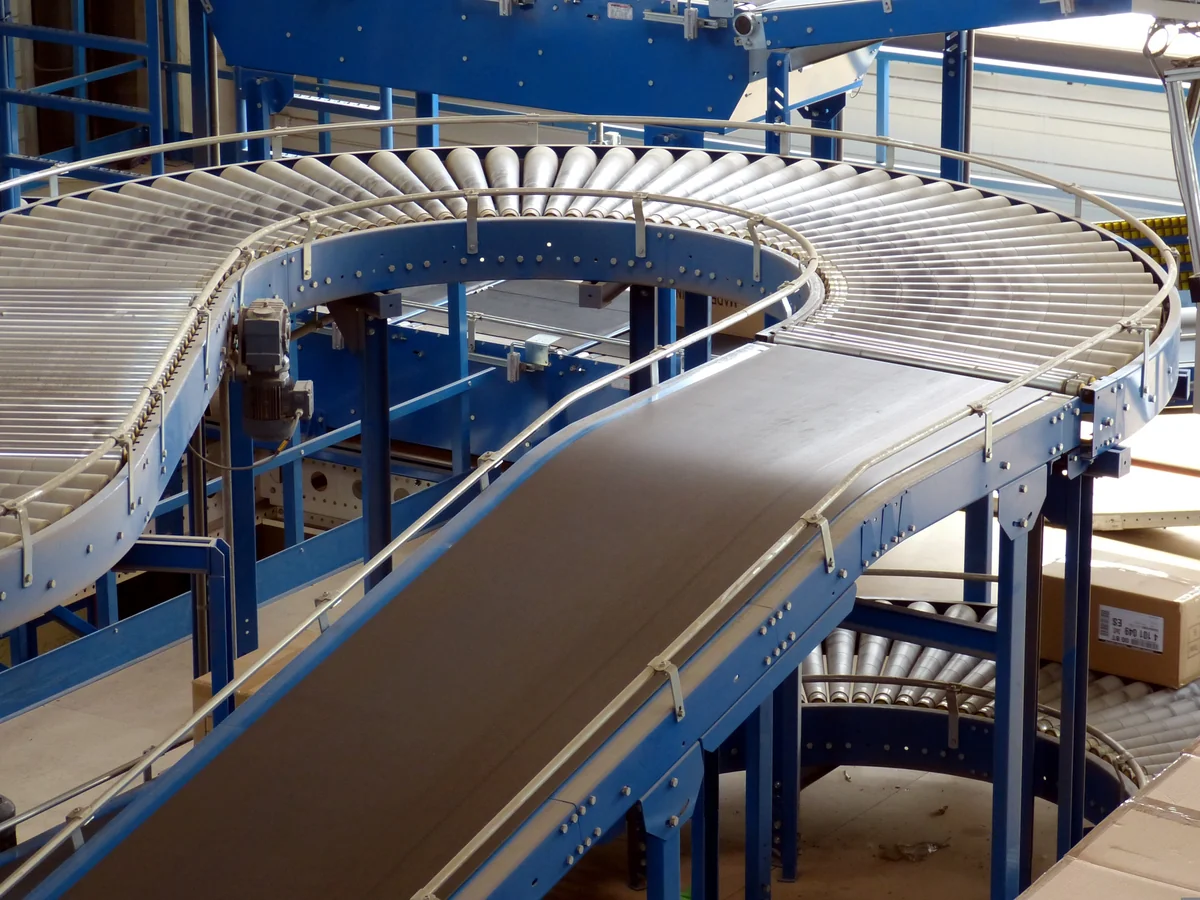
On a PTFE mesh conveyor belt, the opening is the engineering decision. Everything else — coating, edges, joints — follows from what must pass through the belt and what must ride on top of it.
What the opening actually controls
Three things move through the mesh: air, moisture and solvents. The larger the opening, the faster drying and curing run, because the medium reaches the product from both sides instead of only from above.
The trade-offs run the other way: larger openings mean less fiberglass per square meter, lower belt tension capacity, and a greater chance that small or soft product sags into the mesh and picks up a weave imprint.
Small openings: 1×1 to 2×2mm
Fine mesh behaves closest to solid PTFE fabric. Use it for small parts, screen-printing lines where ink must not strike through, and any product with a soft surface that marks easily. Drying speed is the slowest of the range — that is the price of a near-continuous surface.
Medium openings: 4×4 to 6×6mm
The general-purpose zone: textile printing and drying, paper and plastic drying, microwave drying. Airflow is strong enough to matter, product support is still even, and belt strength stays comfortable for standard line tension.
Large openings: 8×8 to 10×10mm
Maximum airflow for shrink tunnels, UV curing lines and heavy moisture-removal duty. Product must be sized so it neither drops through nor deform into the opening — the belt becomes a grid, and the product has to agree with that.
Thickness on the range runs 0.5–1.2mm and width reaches 4,000mm; at large openings, width is rarely the constraint — product geometry is.
When to specify Kevlar (model 6007)
Standard mesh weaves fiberglass. Model 6007 weaves fiberglass with Kevlar, which raises tensile strength for long lines, heavy loads and high-tension tracking. If a belt has been stretching or tracking off-centre between services, 6007 is the upgrade path on the same platform.
Specify in one message
Send the product, the line speed, the temperature and the airflow requirement — the opening, thickness, width and edge style come back as one specification with a price. All belts run -70~260°C and fireproof rated, coatings from the same emulsion line as the fabric and tape ranges.
Direct Factory Solutions Mentioned in This Guide
Manufactured and QC-tested in our Taixing facility. Request technical data sheets or free testing samples.
PTFE Mesh Conveyor Belt · 6001–6015
Open-mesh belting from 1×1 to 10×10mm, widths up to 4,000mm, engineered for continuous drying & curing.
PTFE Coated Fabric · 90 Series
Solid wide-format industrial fabric for closed drying belts and non-porous oven release liners.