Heat sealing tape: five failure modes and the grade that fixes each
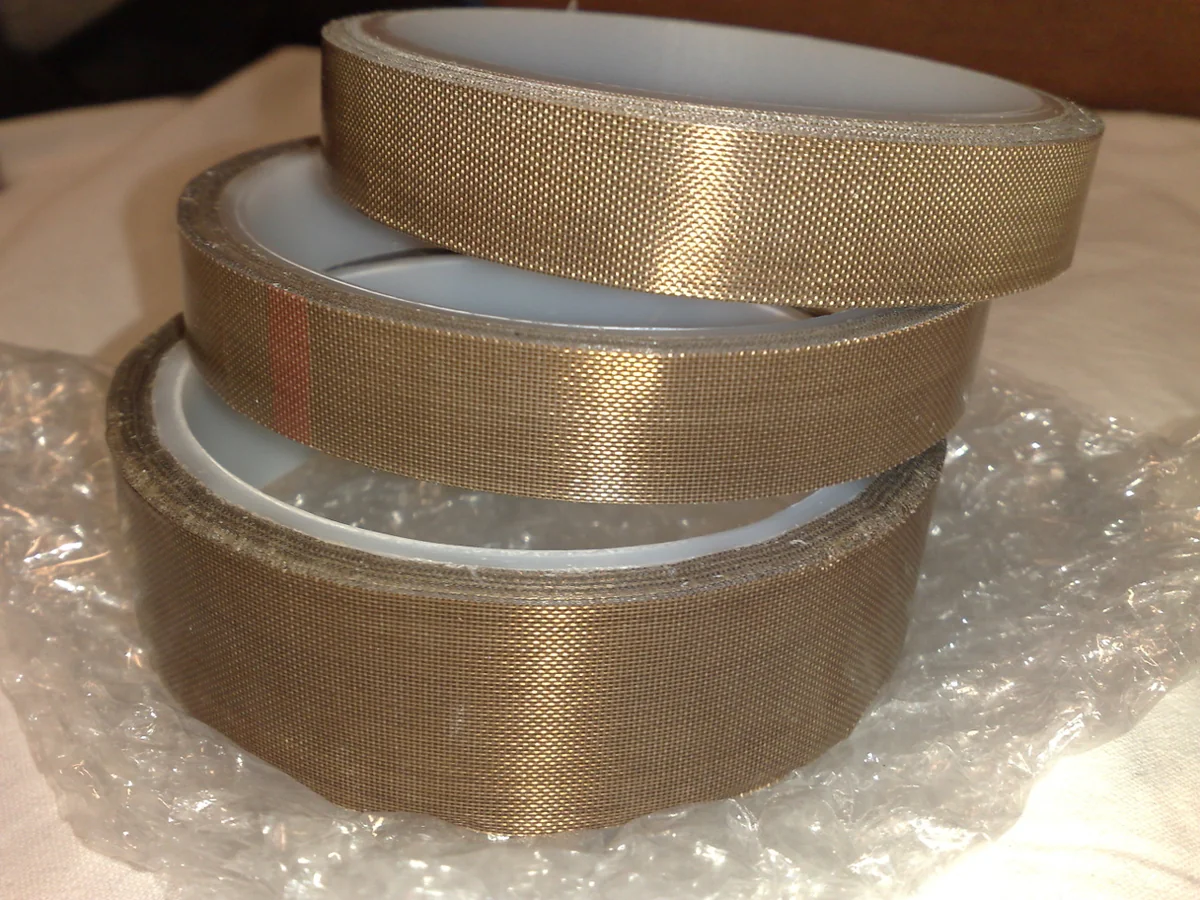
When a packaging line starts producing bad seals, the tape is usually the first part replaced and the last part diagnosed. These are the five failure modes we see most, and the grade-level fix for each.
1. Adhesive bleeding at the edges
Symptom: silicone adhesive squeezes out from under the tape and builds up on the sealing bar. Cause: an over-thick tape carrying more adhesive than the application needs.
Fix: step down one grade. Lines running 0.25mm tape that bleed usually stabilise at 0.20mm — same fiberglass base, less adhesive mass, seal pressure unchanged.
2. Tape charring before the machine does
Symptom: the tape darkens and stiffens while the line is still inside its stated temperature window. Cause: the working range was read as peak temperature, not continuous temperature.
Fix: check the rating against continuous service. The F and FS series are rated for continuous -70~260°C duty; if the bar genuinely runs hotter in cycles, say so in the inquiry — running tape at its limit is a consumable, not a defect.
3. Tape lifting at the edges of the bar
Symptom: edges curl after a few hundred cycles, seals weaken at the bar ends. Cause: adhesive strength too low for the mechanical pull — usually a light grade on a heavy-duty line.
Fix: move up the adhesion ladder. F7013 carries 22 N/100mm adhesion; F7030 carries 62 N/100mm. Heavy-duty sealing, thermoplastic and composite demoulding belong at the top of that range.
4. Tearing under tension
Symptom: tape snaps when the machine threads up or under belt tension. Cause: fiberglass tensile capacity exceeded — either the grade is too light or the tape is the wrong construction entirely.
Fix: match tensile to load. The F series spans 900–3,650 N/100mm. If the requirement exceeds what cloth tape delivers at the width you run, that is the signal to move to 90-series fabric (up to 6,000 N/5cm²) or a mesh belt with Kevlar reinforcement.
5. Wrong base: film where cloth belongs
Symptom: FS film tape conforming beautifully but tearing on a line with mechanical load, or F cloth tape refusing to conform to a fine sealing bar. Both are construction mismatches, not quality problems.
Fix: film (FS, 0.08–0.25mm, max width 600mm) for delicate bars and clean release; cloth (F, 0.13–0.30mm, max width 1,250mm) wherever tension exists. The compare-within-line table on every product page makes this a one-minute check.
Before you reorder
Run the five-point check we put on every product page: base material, thickness and width, continuous working temperature, application, and which certificate scans you need on file. Sent together with the failed tape's behaviour, that inquiry comes back as an exact grade — not a catalogue.
Direct Factory Solutions Mentioned in This Guide
Manufactured and QC-tested in our Taixing facility. Request technical data sheets or free testing samples.
PTFE Adhesive Tape · F Series
Fiberglass-backed heat-sealing tapes across 5 grades: F7013 (0.13mm) to F7030 (0.30mm, 62 N/100mm adhesion).
Pure PTFE Film Tape · FS Series
100% skived PTFE film without cloth core, 0.08–0.25mm for ultra-fine sealing bars and conforming protection.